
How Arrest Warrants Work in Randolph County
An arrest warrant is a judge's order to take someone into custody. The court issues it. The Randolph County sheriff or another authorized agency carries it out. The clerk holds the file. Issuing, serving, and recordkeeping are three different jobs. Georgia's own guidance on existing warrants sends people to the sheriff of the issuing county. That guidance is not a search tool. The Randolph County law-enforcement page lists executing arrest warrants and preserving the public peace among the sheriff's duties. No searchable public warrant roster appears on the site. For a live answer, call the sheriff directly and, when the issuing court is known, check there as well.
Randolph County Arrest Warrant Contact Route
The Randolph County Sheriff's Office sits at 216 Recreation Camp Road in Cuthbert. Call 229-732-2525. Ask about your own legal name and date of birth, what identification is required, the process type, and which court issued it. Phone answers may be limited. Ask which office accepts walk-in requests. An in-person visit can end in immediate custody, so a talk with an attorney comes first. A known Superior Court criminal file belongs with the clerk at 93 Front Street, Room 118, or 229-732-2216. For a Magistrate Court matter, call 229-732-2218. A clerk's record can show the issuing court, the date, the charge category, or an order. It cannot guarantee the sheriff's current service status.
Call script: “Can you confirm whether active process is tied to my legal name and date of birth, which court issued it, and the official next step?”
Arrest Warrants: What They Contain
A real warrant follows a standard field set. Randolph County publishes no filled-in sample, which keeps private identifiers off public view. Not every field is open in every case, since search-warrant material, sealed records, juvenile files, and active investigative information may be restricted. The safest check asks the office directly.
| Issuing court | The Randolph County or municipal court that authorized the process |
|---|---|
| Process type | The exact label, such as arrest warrant, capias, or another court term |
| Date issued | When the court authorized the warrant, not necessarily when it was served |
| Charge category | The alleged offense or statute category, not a finding of guilt |
| Service agency | The sheriff, city police, or other authorized agency responsible for service |
| Status date | The date tied to service, recall, quash, return, or another recorded action |
| Related file | A public case or citation number when available from the custodian |
| Bond direction | Public instructions, if any, that still require current local confirmation |
Ask which of these fields is current and public. A case number helps route the request. Even so, a court file cannot replace live confirmation from the agency responsible for serving the warrant.
Randolph County Arrest Warrants Through PeachCourt
Georgia Courts e-access connects Randolph County Superior Court filings to PeachCourt. Treat it as a court-record and document route, not an active arrest-warrant lookup. The PeachCourt registration page lays out the account fields a reader faces:
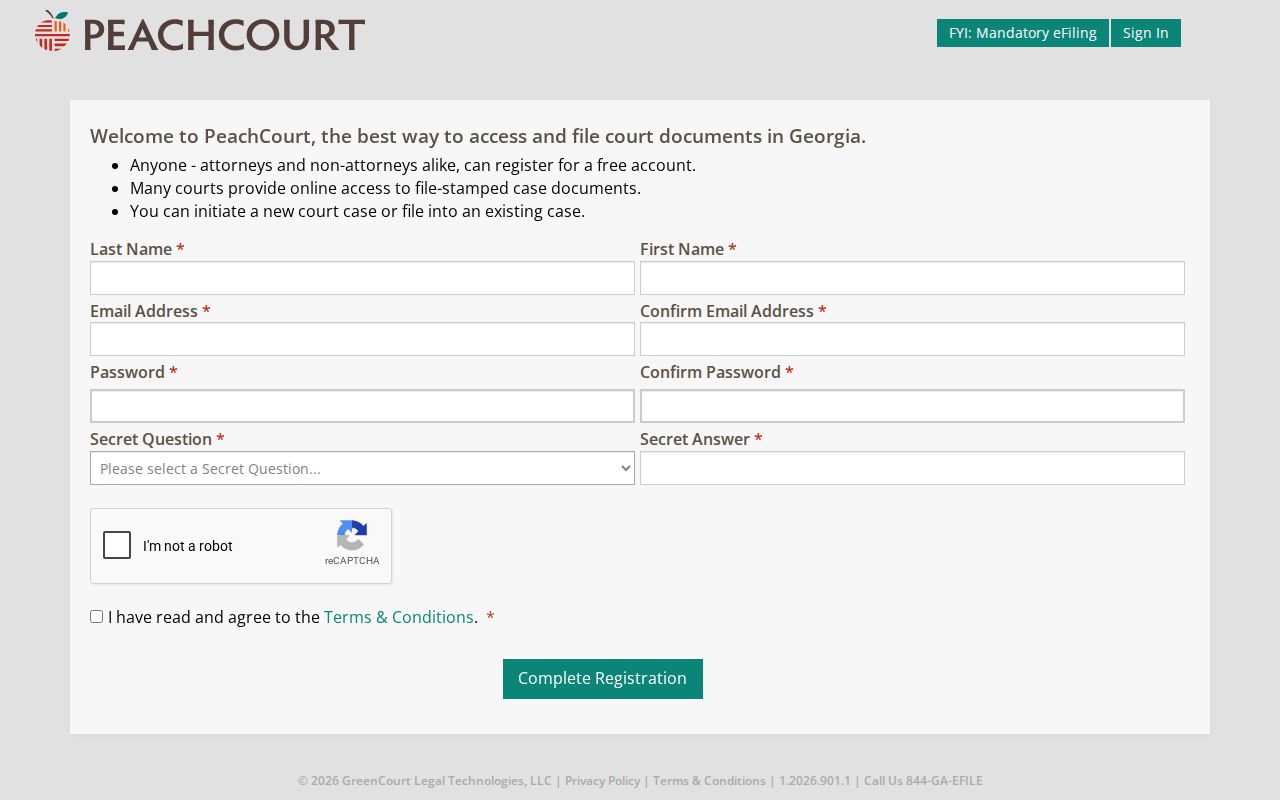
Signing up takes a name, an email, a password, and a secret question with its answer, plus agreement and submission. The vendor says registration is free. Documents, though, can carry a per-page charge and a convenience fee, so confirm the current cost before ordering. Sealed, adoption, and proposed-order materials stay excluded. One more caution: an entry marked "issued" may be old, already served, or even recalled, so verify current status with the Randolph County sheriff or the issuing court before relying on it.
How Warrants Get Served in Randolph County
The sheriff executes Randolph County arrest warrants, though city police or another authorized agency can serve process inside their own jurisdiction. Service is the moment law enforcement carries out the custody order. Issuance is different; that is the court's act. So a warrant can sit issued but unserved, get served while the case stays open, or be recalled before anyone serves it. Dates matter here.Whoever holds the warrant can act during any direct contact with law enforcement, including a routine traffic stop or an in-person inquiry. After custody, booking, a first appearance, and a bond decision may follow, depending on the case and the court. Randolph County publishes no warrant surrender schedule, no fixed bond amounts, and no promise that turning yourself in avoids custody. Ask counsel and the responsible office about the current procedure before you travel.
Randolph County Arrest Warrants: Issued or Served
Status words answer different questions. "Issued" means the court authorized the process. "Served" means an agency carried it out. "Recalled" means the court withdrew the warrant from active effect, while "quashed" means the court set it aside entirely. A return may document what happened after officers received the process. Silence in an online search proves none of these statuses, so confirm with the Randolph County issuing court.
- Issued
- The warrant was authorized by the court.
- Served
- Law enforcement executed the custody direction.
- Recalled
- The issuing court withdrew the process from active effect.
- Quashed
- The court formally set the process aside.
Georgia's official Uniform Traffic Citation carries separate "Warrant Issued" and "Warrant Served" fields, which reinforces the point. The form covers traffic process, yet the field design shows why one status can never substitute for the other. Ask the Randolph County court for the status and its date.
Arrest Warrants, Summonses, and Bench Warrants
These documents call for different responses. An arrest warrant directs custody. A summons tells a person to appear without starting with an arrest. A bench warrant usually follows a missed duty in an existing case. The exact Randolph County document and its issuing court control, so treat any table as a routing aid rather than a ruling on your case. The companion bench warrant lookup goes deeper on missed-court process.
| Feature | Arrest Warrant | Summons | Bench Warrant |
|---|---|---|---|
| Direction | Take the named person into custody | Appear as directed | Custody after an unmet court duty |
| Starting point | Charge or proceeding | Notice to answer a matter | Existing case or court obligation |
| Issuer | Judge or magistrate | Court or authorized official | Judge in the case |
| Response | Counsel, surrender plan, bond, court | Appear on the stated date | Ask about recall, quash, and appearance |
Ask the issuing court what happens next. Paying a balance, receiving a summons, or seeing an old service entry never guarantees the underlying Randolph County case has closed.
Randolph County Arrest Warrant Access Limits
A blank search result never proves that no arrest warrant exists. Some records in Randolph County simply stay closed. Search-warrant affidavits can remain confidential before execution, juvenile records are restricted, and sealed files stay unavailable, while active investigative details may fall within Georgia Open Records Act exemptions. Federal cases follow a separate court system and can be sealed as well. Ask whether non-exempt parts can be split out. A narrow request beats demanding an all-person list. Ask for existing, non-exempt records on your own case. Give the court, the approximate date, and the case or citation number if you have them. If a request is denied, ask which exemption applies. Keep private names, dates of birth, addresses, photos, and warrant numbers out of unofficial compilations. Federal Randolph County cases belong to the Columbus Division of the U.S. District Court for the Middle District of Georgia. PACER is the official federal docket route. Randolph County sheriffs and courts cannot recall federal process.
Randolph County Arrest Warrants and DDS
A Georgia DDS suspension confuses a lot of people. It is an administrative license action, not an arrest warrant record. A Randolph County court may report a traffic failure to appear to DDS while recording the warrant separately. The DDS failure-to-appear page shows the state license route.
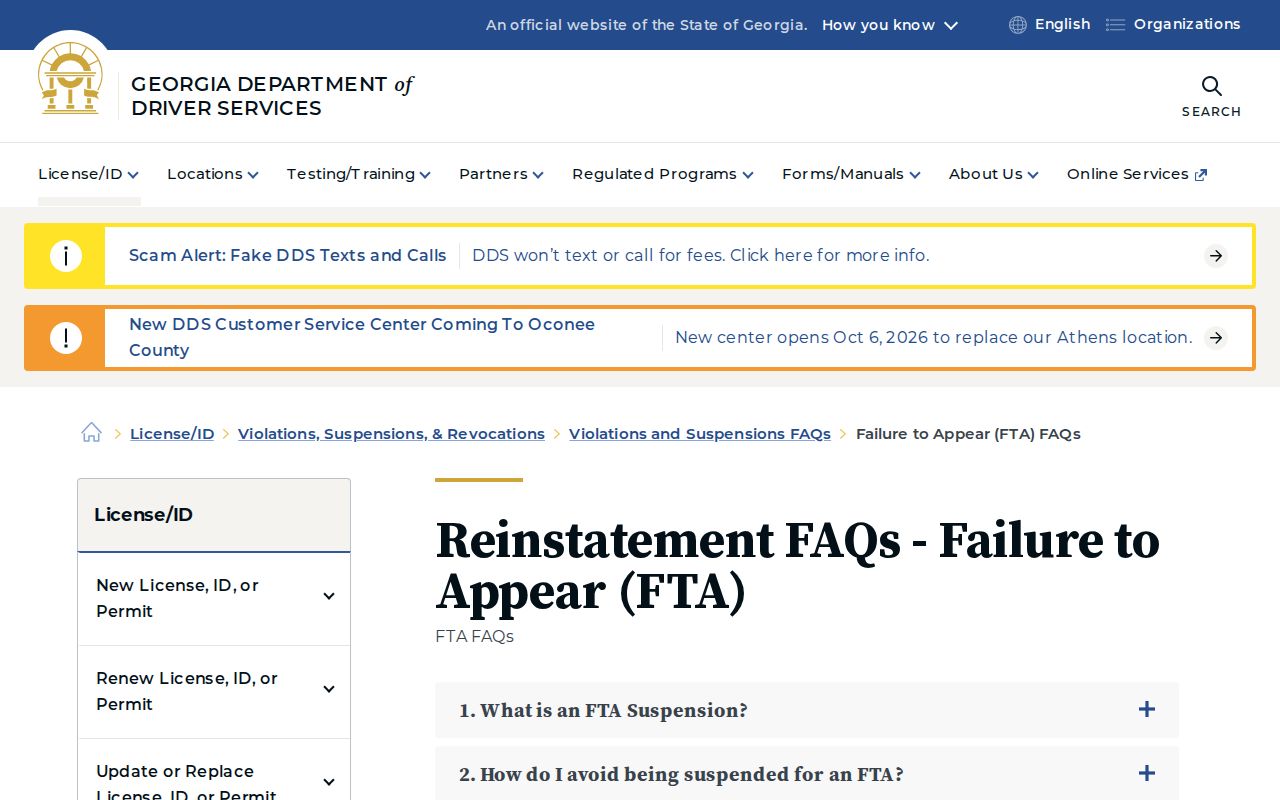
Let DDS explain the license consequence. Take the case to the court named on the citation. Ask that court about any warrant, and ask the sheriff or the responsible police agency about active service status. Paying the citation does not end the story. A warrant is not recalled just because a hold clears, so get written confirmation from the Randolph County court.
Handling an Arrest Warrant in Your Name
First confirm the basics. You want the issuing court, the process type, the status date, and the serving agency. Talk to an attorney before showing up in person. Depending on the case and the court's current direction, lawful options may include a planned voluntary surrender, posting bond if authorized, or asking the court to recall or quash the warrant. A lawyer can weigh which path fits and coordinate with the court or sheriff. No private website can clear a Randolph County warrant.
Important: Discuss surrender, bond, and any motion to recall or quash with counsel before appearing, because an active warrant may lead to immediate custody.
Watch for phone scams. No law enforcement officer demands gift cards, bond vouchers, or payment through a caller-provided link to clear a warrant. The Georgia Attorney General says so plainly. Hang up and check the official number yourself. Randolph County pages post no exact bond amounts, surrender hours, or release guarantees, so ask the court and sheriff for current instructions.